
How to read a peptide certificate of analysis
A practical guide to checking a peptide COA: match the sample, separate identity from purity and content, and read each result against its stated limit.
Read the guide →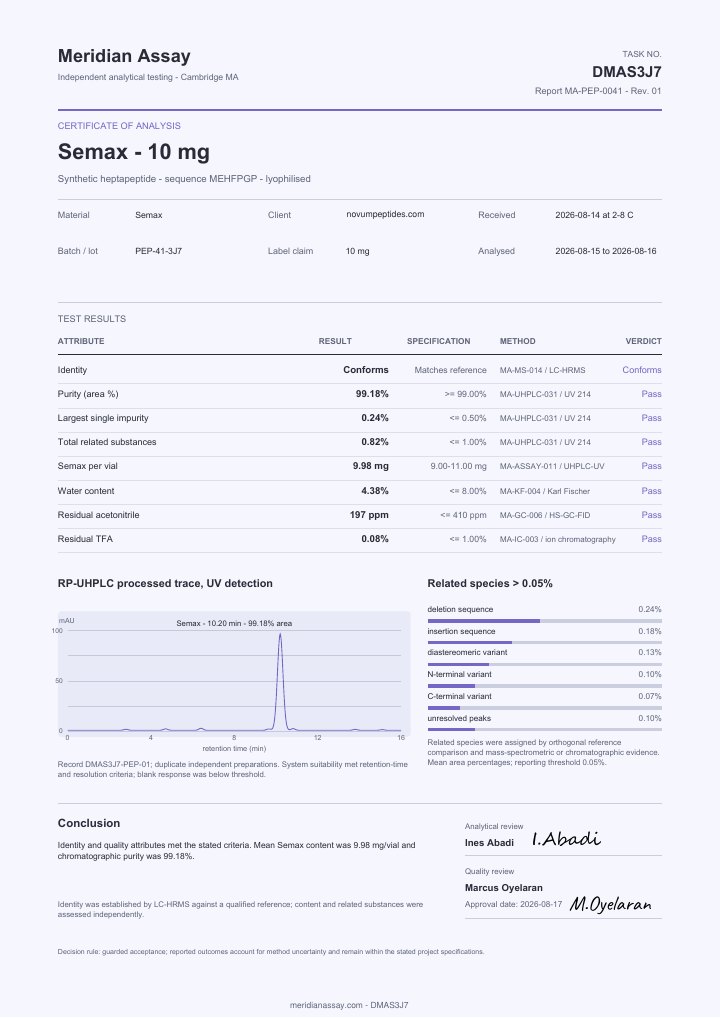
Explore peptide science, analytical testing and the documentation behind research materials.
A practical guide to checking a peptide COA: match the sample, separate identity from purity and content, and read each result against its stated limit.
Read the guide →Attribute commercial descriptions, analytical statements and published experimental findings to their actual sources without blending their evidential roles.
Read the article →Check quotations and close paraphrases against their original passages, preserving qualifiers, context and the difference between observation and interpretation.
Read the article →Trace repeated scientific claims through their references to distinguish independent evidence from summaries that ultimately rely on one another.
Read the article →Check figure-specific reuse terms and preserve scientific context when including published visual material in a research explanation.
Read the article →Make invented numbers and scenarios clearly recognisable as teaching examples rather than laboratory measurements or published findings.
Read the article →Read result and specification fields without converting an acceptance limit, label claim or test verdict into a measured value.
Read the article →Document what is known and unknown about a peptide identity without filling gaps with an assumed sequence, structure or database identifier.
Read the article →Make substantive changes to scientific explanations traceable, including what was wrong, what changed and whether the interpretation was affected.
Read the article →Verify the references, molecular identities, numerical statements and evidence boundaries in AI-assisted research writing before relying on the draft.
Read the article →Keep a compact evidence record that connects an article’s important claims to inspected sources, limitations and editorial decisions.
Read the article →Describe the exact peptide sequence used in a study without confusing a database reference, intended construct and experimentally established identity.
Read the article →Make terminal groups, residue modifications, linkages and supplied form explicit when describing a peptide reagent in research reporting.
Read the article →